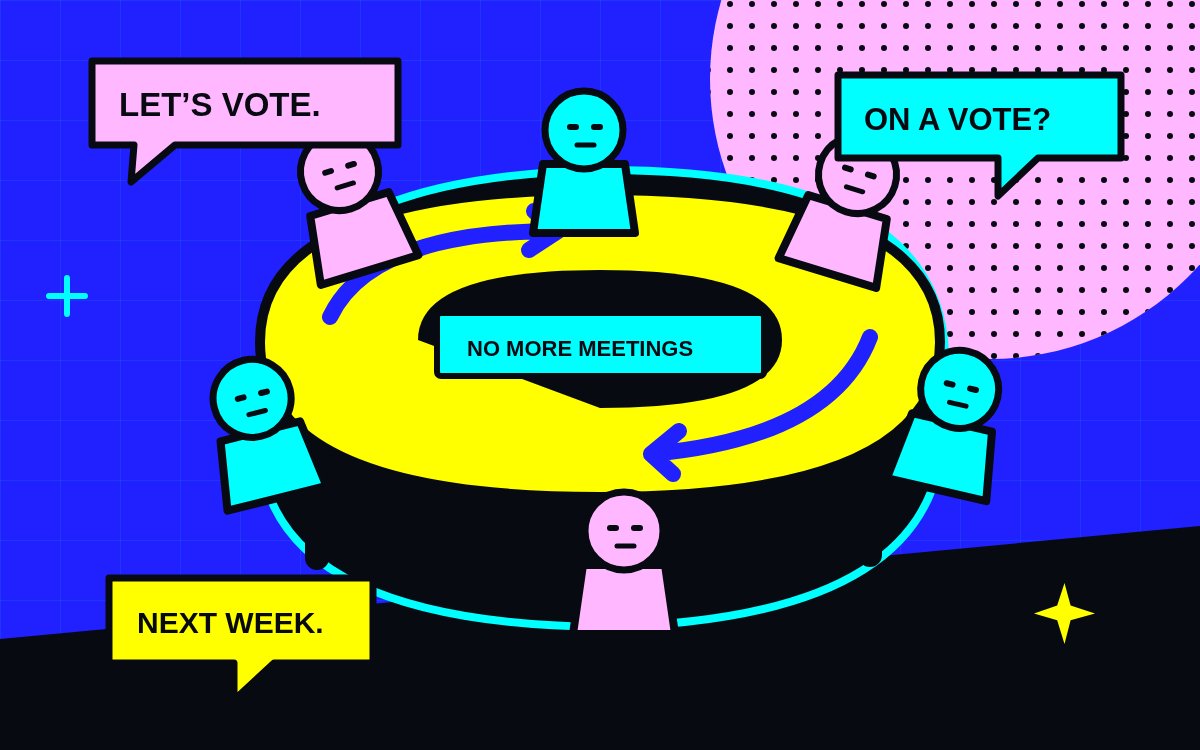
At its sixth weekly meeting about meeting reduction, the Circular Table DAO discovered that it lacked a quorum to cancel the next meeting. Several delegates were attending a parallel working group on improving attendance. Others had delegated their votes to a member who was moderating both calls and could not find the mute button.
"We need less process, but we need to get there through the correct process," said the governance facilitator. Her proposal would replace weekly meetings with a weekly assessment of whether a meeting was necessary. Members praised the clarity and asked when the assessment meeting would take place.
The treasury committee requested an impact study. A volunteer counted every hour spent discussing the proposal, but the number was rejected because it included the time spent discussing how to count it. A revised methodology excluded administrative overhead and found that the DAO had held almost no meetings at all. This was celebrated in a special community call.
A delegate then proposed an emergency vote to stop immediately. The proposal could not reach a vote until the consultation period ended, and the consultation period could not end until the community agreed it had been sufficiently consulted. The facilitator opened a temperature check. Someone asked whether that was binding. Someone else opened a temperature check on the question.
By the end of the sixth week, everyone agreed that the system needed a simpler path for small decisions. The DAO established a standing committee to design it, plus a rotating committee to ensure the standing committee did not become entrenched. Its first recommendation was a short introductory meeting. The minutes record unanimous approval, although nobody remembers being present when the decision was made.