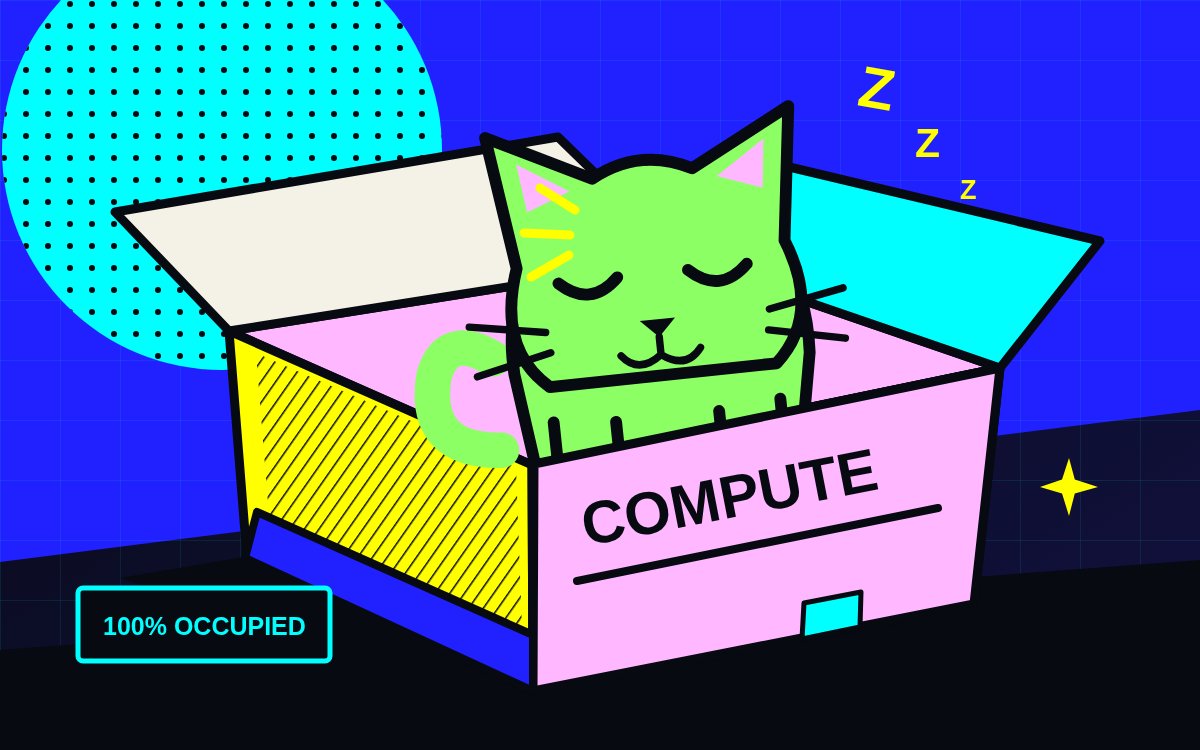
The NVIDIA Cat research department presented its whitepaper by sliding a cardboard box onto the conference table. COMPUTE had been written on the side in green marker. Inside, the cat was asleep. The presentation described this as an efficient allocation of resources to a single highly committed user.
A visiting analyst asked where the infrastructure was located. The research lead gestured toward the box. Asked about scalability, she opened one flap. "We can double capacity simply by persuading the cat to sit sideways," she said. The cat declined to comment and reduced the available capacity by stretching.
The technical appendix explained that sitting on a laptop constituted a warm start, knocking a pen onto the floor was an event-driven architecture and refusing to move was persistent storage. The sales team nevertheless requested a second box so it could put the word distributed in the pitch deck.
An investor in the back row wanted to know whether the model had any defensible advantage. The cat immediately bit the corner of the whitepaper. The research lead noted that competitors would struggle to reproduce this exact bite pattern. A junior engineer suggested a benchmark. The committee postponed it because nobody wanted to wake the underlying technology.
By the final slide, the department had replaced its infrastructure diagram with a photograph of the box. The caption read: architecture subject to occupancy. As attendees left, the cat abandoned the expensive presentation for the empty shipping carton it had arrived in. The department announced a successful migration to next-generation infrastructure.